
Written by Lilly Thies, Class of 2026
In Spring of 2025, Willamette’s literary magazine The Mill launched their annual publication with a reading in the Writing Center, where writers, artists, editorial staff, and friends were invited to be in community, hear writers read their work, and celebrate the 60th year since the founding of Willamette’s literary magazine. Over those 60 years, the magazine endured many name changes, financial issues, and special editions, but it has continued to showcase Willamette’s creative prowess and the state of the student body to this day.
In October 1964, the Collegian reported that Jason, the newly-minted first rendition of Willamette’s literary magazine, had been approved by the Senate as an ASWU-affiliated and funded publication with the intention of allowing students to ‘“go on a search of their own,’” according to editor Judy McLean. This philosophy of self-reflection is echoed by the publication’s name, which references the Greek hero Jason and his quest for the Golden Fleece. Further, the title also alludes to Jason Lee, the founder of Willamette, and his “search for education.”1
The journal, which comprised student and faculty works judged blindly by staff, triumphantly debuted in Spring 1965 and opened with a tribute to the journal’s purpose and name by professor and prominent Oregon artist Carl Hall:
Jason: in the metaphorical sense, the seeker after truth, the creative individual in quest of his inheritance, his portion of subjectivity and conscience upon which, like a sailor, he takes ship. Any truth that it is possible to believe in is the Golden Fleece and the voyage is always on uncharted seas: strange shores beckon forever into time and distance where silence is yet unsung.2
The first few editions of the Jason can generally be characterized by simple elegance– many are hardcover, with serif fonts and uncomplicated layouts, featuring mostly writing with some photographs of oil paintings included. In 1968, however, the editorial staff at the time decided to rename the journal Jason’s Phantasy, likening the “futuristic phantasies” of the college youth to Jason Lee’s “now successful phantasy” of founding Willamette. Perhaps a commentary on the somewhat severe nature of previous editions of the Jason, Bedford and Gard write: “The editors felt cramped by an unspoken censorship … Hopefully the limit of indecency has been stretched so that one day Jason’s Phantasy can be freely creative.”3 The aforementioned free creativity is more apparent in this edition than the previous, with colorful endpapers, more variety in art, and writing featuring explicitly sexual content. Perhaps that year’s editorial staff was influenced by the Summer of Love movement taking place just the summer before– the first of many editions of the literary magazine to contain echoes of current events.
The 1969 Jason saw a return to its original title, but with slightly looser formatting and colorful cover pages. Throughout the following editions of the Jason, each one becomes more creative with its format, printing style, and variety of work, and the editors seem to feel a real ownership of their work. The editing staff of the 1978 Jason describe the journal’s purpose as a way of examining “that which has passed through” what they uniquely call the “colander of perception,”4 seeking to embody the spirit and expression of the student body. Likewise, 1988 editor Kara Kosmatka describes the Jason as “a sculpture, emblematic of various insights, emotions, knowledge and events– past and present.”5 The 1992 Jason contains no introduction and rather poses a simple question: “What do you believe you are capable of?”6
A new publication came onto the Willamette scene in 1983– Jason II, which was meant to showcase the academic excellence of Willamette’s students in a similar way to how the Jason showcased artistic and creative excellence. According to a 1987 edition of the Collegian, “The Jason II was originated by professor Suresht Bald, who saw the need for a medium to exhibit excellent student writing on campus.” However, unlike the original Jason, the new publication was not an official ASWU publication, but received funding from the Student Affairs board, eight academic departments, and other outside organizations.7
In the summer of 1996, beloved Willamette professor and advisor of the Jason Carl Hall passed away, sparking a heartfelt tribute in the next edition of Willamette’s literary magazine, renamed as Chrysalis in his honor. The aptly-renamed magazine entered a new era with a “new focus, and a new vision,” with staff writer Helen Atsma citing the 1996-1997 school year as “a time of rebirth for Chrysalis.”8 Chrysalis still featured literary works, but encouraged more multi-media and artistic works to be included.
The layouts of the Chrysalis were also strikingly modern and pointed toward the coming digital age, while also reflecting contemporary ideas and reactions to current events. In 2003, Chrysalis staff released a special edition called “Precision Munitions: Loaded Words & Other Reconnaissance Imagery on War,” which featured works of art and writing commenting on the United States’ participation in the Afghanistan and Iraq wars. This edition reflected a widespread aversion to war and conflict in the Middle East that was common amongst university students at the time of its publishing and still resonates today.

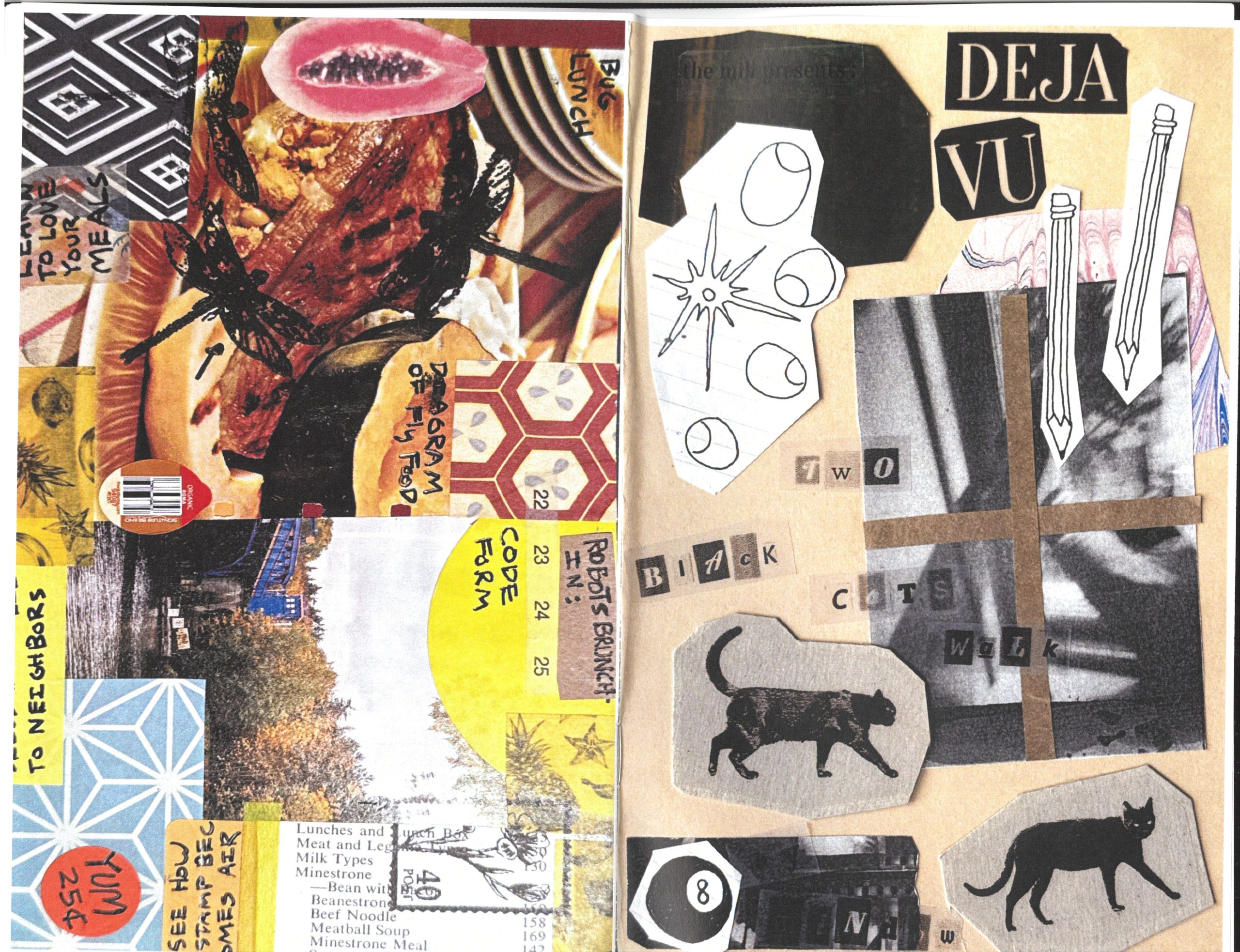
In 2015, Chrysalis was renamed once more to The Mill. According to Scott Nadelson, the club’s advisor during this transition, staff decided that Chrysalis was “too generic a name” and was not specific to Willamette. The Mill, Nadelson suggests, references both the Mill Stream running through campus as well as the hard work of creating literature and art– “life experiences as grist for the mill.”9 Editions of The Mill up until 2019 can be generally seen as a callback to the more formal, classic layout of the original Jason. Notably, The Mill features a great deal of photography, perhaps reflecting a growing interest in the student population.
History repeats itself, and the same could be said of Willamette’s literary magazine. In 2019, the magazine was cleverly renamed once again to Argot. “Argot” is a nineteenth-century term that literally means the slang and jargon of a certain group of people (e.g. the Willamette population), but it also phonetically recalls Jason and the Golden Fleece, as Jason’s ship is famously called the Argo. In the Argot’s first (and only) edition, the editor’s note describes their efforts as such: “Throughout the journal’s history, each name change has been the result of a desire to alter the artistic direction of the journal… Our goal… is to create a journal more representative of the totality of Willamette’s artists, and to invite those who may not think themselves to be creatively inclined to participate.”10

Unfortunately, this hopeful edition would be Argot’s last. The emergence of the COVID-19 pandemic in 2020 caused Willamette to shut down and halted any future issues of Argot until 2022, when the name reverted to The Mill once more.
Another tradition that each magazine has unintentionally participated in has been hiatus and resurgence. Between 1974 and 1978, the Jason was absent for four years, but was revived with a forty-page edition containing “student and faculty writings, supplemented with some outstanding photography and india ink-type drawings,” according to a Collegian article written by then-editor John Partigan.11 It’s unclear why the magazine was on hiatus, but it can sometimes be attributed to shifting leadership, lack of financial resources, or simply lower demand. Chrysalis followed suit– between 2001 and 2003, there was no funding allotted by ASWU for Chrysalis’ production or printing, effectively halting the magazine’s activities for two years.12 Likewise, The Mill experienced a similar hiatus between 2022 and 2024 due to staff retention issues. However, the persevering spirit of Willamette’s creative community has never allowed the magazine to stay dormant for long.
Since The Mill’s revival in 2024, efforts have been focused toward involving as much of the Willamette community as possible to increase submissions. The Mill staff not only produces the magazine, but hosts events such as writing workshops, typewriter poetry pop-ups, and Open Mic nights, in hopes of spreading the word about the magazine and helping to bolster Willamette’s creative spirit.

Each edition of the magazine– whether it be the Jason, Chrysalis, Argot, or The Mill— acts as a time capsule, revealing the deepest fears and desires (or phantasies) of its writers and artists. The Willamette community’s consistency in maintaining the literary magazine over 60 years through all its various renditions and hiatuses is a testament to the enduring desire to immortalize the creativity of its students and faculty, a tradition that will certainly continue for years to come.
Endnotes
Click to expand
- “New Literary Piece Approved by Senate,” Willamette Collegian, 23 October 1964, 1.
- Carl Hall, “Jason.” Jason, 1965.
- Bonnie Bedford and Brian Gard, “Note from the Editors.” Jason’s Phantasy, 1968.
- Editors, “Note from the Editors.” Jason, 1978.
- Kara Kosmatka, “Preface,” Jason, 1998.
- Editors, Jason, 1992.
- “Journal Exhibits Student Writing,” Willamette Collegian, 16 October 1987, 7.
- Helen R. Atsma, “Biography of Carl Hall,” Chrysalis, 1996.
- Scott Nadelson, email message to author, September 8, 2025.
- Editors, “Note from the Editors.” Argot 2019.
- “‘Jason’ Returns,” Willamette Collegian, 28 April 1978, 4.
- “No Money for Chrysalis,” Willamette Collegian, 29 November 2001, 1.
Works Referenced
Click to expand
- Atsma, Helen R. “Biography of Carl Hall.” Chrysalis, 1996. Student Publications Collection, WUA023. Willamette University Archives and Special Collections. https://digitalcollections.willamette.edu/handle/10177/11256.
- Bedford, Bonnie, and Brian Gard. “Note from the Editors.” Jason’s Phantasy, 1968. Student Publications Collection, WUA023. Willamette University Archives and Special Collections. https://digitalcollections.willamette.edu/handle/10177/11279
- Editors. Jason, 1992. Box 5. Student Publications Collection, WUA023. Willamette University Archives and Special Collections.
- Editors. “Note from the Editors.” Jason, 1978. Student Publications Collection, WUA023. Willamette University Archives and Special Collections. https://digitalcollections.willamette.edu/handle/10177/11287
- Editors. “Note from the Editors.” The Argot, 2019. Box 10. Student Publications Collection, WUA023. Willamette University Archives and Special Collections.
- Hall, Carl. “Jason.” Jason, 1965. Box 5. Student Publications Collection, WUA023. Willamette University Archives and Special Collections. https://digitalcollections.willamette.edu/handle/10177/11276
- “Jason is Scheduled for April 20.” Willamette Collegian, 14 April 1965, 5. https://hdl.handle.net/10177/10658/. Accessed 27 August 2025.
- “‘Jason’ Returns.” Willamette Collegian, 28 April 1978, 4. https://hdl.handle.net/10177/8375. Accessed 27 August 2025.
- “Journal Exhibits Student Writing.” Willamette Collegian, 16 October 1987, 7. https://hdl.handle.net/10177/7562. Accessed 27 August 2025.
- Kosmatka, Kara. “Preface.” Jason, 1998. Box 3. Student Publications Collection, WUA023. Willamette University Archives and Special Collections.
- “New Literary Piece Approved by Senate.” Willamette Collegian, 23 October 1964, 1. https://hdl.handle.net/10177/10704. Accessed 27 August 2025.
- “No Money for Chrysalis.” Willamette Collegian, 29 November 2001, 1. https://hdl.handle.net/10177/10620. Accessed 27 August 2025.
Image Citations
Click to expand
- Cover, “Precision Munitions.” Chrysalis, 2003. Box 3. Student Publication Collection, WUA023. Willamette University Archives and Special Collections.
- Cover, Argot, 2019. Box 10. Student Publications Collection, WUA023. Willamette University Archives and Special Collections.
- Cover, “Deja Vu.” The Mill, 2025. Box 10. Student Publications Collection, WUA023. Willamette University Archives and Special Collections.